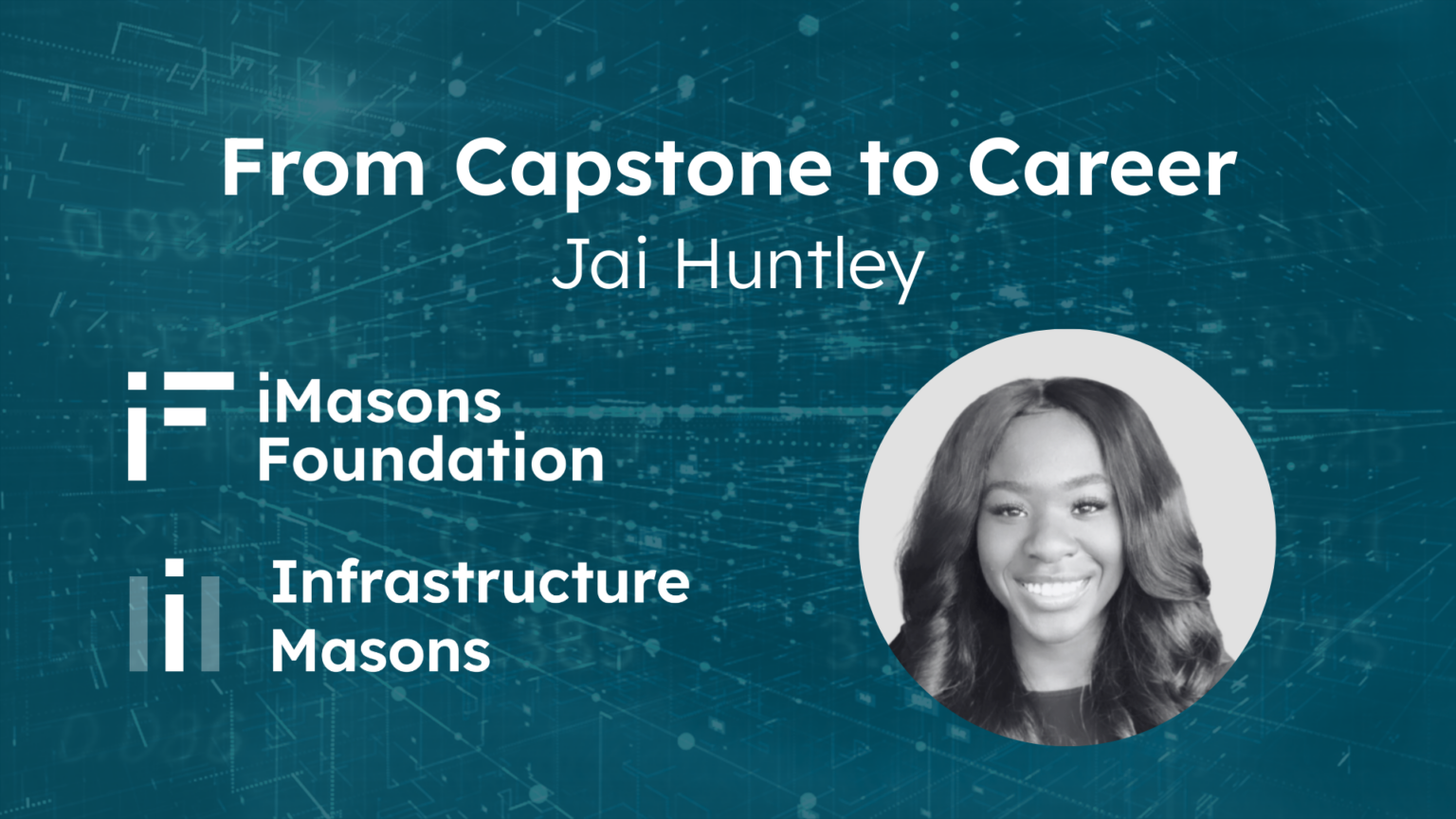
From Capstone to Career: How Jai Huntley Turned a Student Project Into a Pathway at EdgeConneX
When we think about what makes a powerful education-to-workforce pipeline, Jai Huntley’s story captures it perfectly: curiosity, real-world challenge solving, and mentors who show up.
Jai was part of the very first iMasons Capstone Cohort, a group that helped us imagine what a true applied learning experience could look like for students entering the digital infrastructure industry. Today, she’s thriving at EdgeConneX, where she has been since 2021. Her journey is exactly the kind of impact we want the program to scale.
Why Students Like Jai Joined the Capstone
Jai wasn’t looking for a traditional lecture-heavy experience. She wanted a challenge. Something open-ended, something to figure out. So when she heard about a program, she was in.
Prior to the iMasons/Hampton introduction, her team initially explored building an app that intertwined artificial intelligence and education. After the introduction, her team blended the app development with the data center. As the weeks progressed, diving into latency, cooling, site selection, and server design, the project shifted into a full data center build. It was exactly the kind of hands-on, exploratory learning she was craving.
The Power of Strong, Responsive Mentorship
If you ask Jai what made the program work, she answers immediately:
Industry leaders like Phillip Marangella, Jack Elsea, and Bill Kleyman didn’t just lecture, they guided. They provided “breadcrumbs” instead of rigid instructions: here’s the goal, here’s what to look into this week, come back with what you find.
That structure pushed the students to think independently while never feeling lost.
“The biggest difference was that our mentors were there. They were a wealth of knowledge and made themselves available when needed.” — Jai Huntley
For students managing full course loads and senior projects, that level of responsiveness mattered, a reminder of how essential consistent engagement is for any program where students are juggling multiple demands.
That support paid off. Phillip ended up recruiting Jai to EdgeConneX before her final capstone presentation.
Cross-Disciplinary Work That Made the Project Come Alive
One of the most unique parts of Jai’s experience was collaborating with architecture students from Hampton University.
The engineering department typically is known to be “black-and-white” as Jai described them, while the architecture department was colorful. Their projects allowed their design concepts to come to life with renderings and 3D models to match.
Working cross departmental allowed a physical representation of their work and gave the project a new dimension. It showed the students how different disciplines come together in digital infrastructure, a perspective many early-career engineers never gain until they’re on the job.
Launching Into a Career During a Moment of Industry Transformation
Jai joined EdgeConneX at a pivotal time. When she started, data centers were still focused on 4 -12 kW cabinets. Today, she’s working in a world of 200 kW + demand per cabinet, a staggering shift that is altering how the entire industry designs and scales facilities.
She still loves the company. And she’s part of a small but growing group of early capstone students, like her capstone partner Marquis. Marquis is in the data center industry at Bank of America. He is in the field long-term and is now moving into leadership pathways.
Why Her Story Matters for the Future of the Capstone
As we prepare to relaunch the Capstone program under DIFF, stories like Jai’s illuminate what truly works:
- Mentors who are present, knowledgeable, and responsive
- A flexible, challenge-driven structure
- Cross-disciplinary collaboration that mirrors real project teams
- Clear pathways from learning to industry employment
Our early cohorts were strong, particularly during the pandemic when people naturally had more available time. But sustaining that success now requires intentional design, consistent mentor participation, and integration with a broader curriculum that schools can adopt.
That is the model we are building toward.
Jai’s Commitment to Giving Back
Today, Jai isn’t just a success story, she’s ready to pay it forward.
She wants to mentor students, speak on panels, and help young people, especially young women, understand that they belong in this industry. She has already spoken on panels in the past, and we’re excited to involve her in future opportunities, including DCD Virginia and upcoming DIFF workforce initiatives.
Jai’s story reminds us why this work matters and what is possible when industry, educators, and emerging professionals build pathways together.
_
ABOUT THE IMASONS FOUNDATION
The iMasons Foundation is the philanthropic arm of Infrastructure Masons (iMasons), a global nonprofit association of digital infrastructure leaders. Formerly known as the Digital Infrastructure Futures Foundation (DIFF), the Foundation was rebranded to better reflect its close alignment with industry and its expanded focus on education, workforce development, and long-term talent pathways.
The iMasons Foundation works to strengthen the digital infrastructure ecosystem by expanding access to education, training, and career opportunities across K–12, higher education, trades, and workforce development. Through scholarships, partnerships, and industry-driven initiatives, the Foundation supports students, veterans, career-changers, and underrepresented populations in building meaningful, sustainable careers in digital infrastructure.
To date, the iMasons Foundation (formerly DIFF) has contributed USD $1+ million in scholarships, helping individuals gain the skills and credentials needed to meet the growing global demand for digital infrastructure talent.
To learn more about the iMasons Foundation, visit https://imasons.org/initiatives/people/imasons-foundation/.